


🔄 June–July 2026 Update: Water vapor fireplaces and ethanol burners are becoming increasingly popular among homeowners, architects, interior designers and construction professionals. Yet despite their growing popularity, many misconceptions still influence how these modern technologies are perceived. Safety, humidity, energy consumption, maintenance and ease of installation are just some of the topics surrounded by persistent myths.
Do water vapor fireplaces really create humidity inside the home? Are ethanol burners dangerous? Can a ventless fireplace be relied upon for everyday use? Between outdated information, misunderstandings and confusion between different fireplace technologies, it is not always easy to separate fact from fiction.
In this updated 2026 guide, AFIRE explores the reality behind these common beliefs and answers the 10 most frequent misconceptions about water vapor fireplaces and ethanol burners. A better understanding of their features, advantages and limitations will help you make a more informed decision for your project.
True or False? AFIRE Answers the Most Frequently Asked Questions
Humidity, safety, electricity consumption, odors, maintenance and ease of installation: here are the 10 most common misconceptions about water vapor fireplaces and ethanol burners. For each of them, we provide a clear answer based on the experience of a specialized manufacturer.
Ethanol Burners and Water Vapor Fireplaces Are Dangerous
False. This is one of the most common concerns when considering a modern fireplace. However, today's water vapor fireplaces and ethanol burners are designed to provide a very high level of safety when used in accordance with the manufacturer's recommendations.
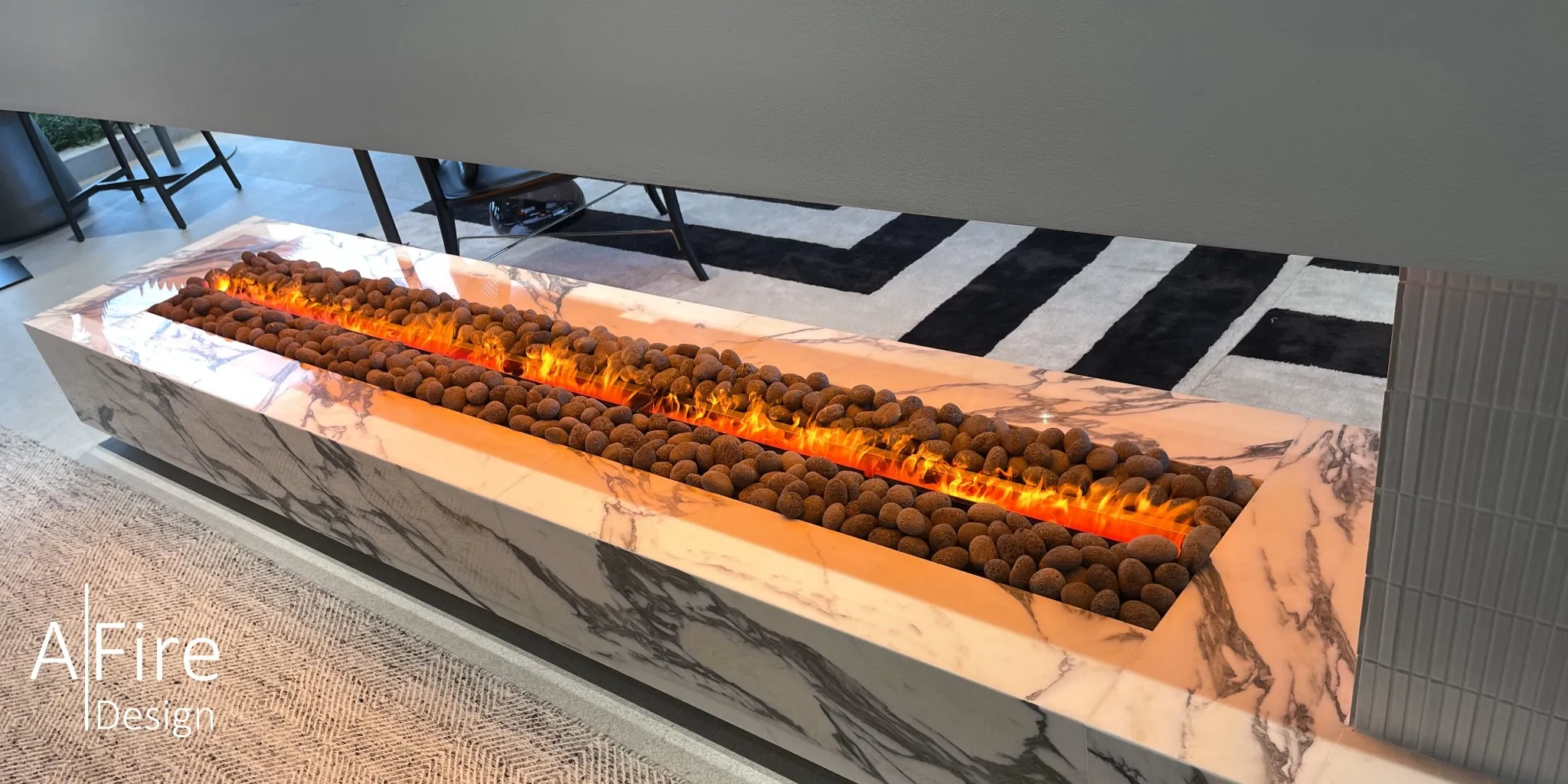
Water vapor fireplaces are the only realistic flame fireplaces that operate without combustion. The flames are created using water and light, with no real fire, no gas and no flammable fuel. They remain cool to the touch and present no burn risk from the flame itself. This technology is now widely used in private homes as well as in hotels, restaurants, retail spaces and other public venues.
Modern automatic ethanol burners also incorporate numerous safety features. These include electronic sensors, continuous system monitoring, temperature control and automatic shutdown procedures in the event of an abnormal condition. While they produce real flames and real heat, their level of safety is incomparable to that of older manual ethanol burners.
As with any appliance that produces real flames, it is important to follow the installation and operating instructions. Nevertheless, modern technologies have significantly improved the safety of decorative fireplaces over the past few years.
👉 Learn more about the safety of water vapor fireplaces for children and families
Fireplaces Are Too Restrictive in Everyday Life
False. In fact, this is one of the main reasons behind the success of water vapor fireplaces and ethanol burners. These technologies were specifically developed to provide the beauty of realistic flames without the constraints traditionally associated with conventional fireplaces.
Unlike wood-burning fireplaces or certain gas installations, they generally require neither a chimney flue, nor bulky fuel storage, nor regular chimney sweeping. They also eliminate the ashes, soot and dirt commonly associated with traditional fireplaces.
Ethanol burners use a fuel that is readily available in many countries, while water vapor fireplaces operate simply with water and electricity. In both cases, installation is generally easier and more flexible than with a traditional fireplace, making them suitable for both new-build projects and renovations.
For many users, the main advantage is being able to enjoy the atmosphere of a fireplace without the daily constraints associated with wood, gas or chimney maintenance.
Fireplaces Are Difficult to Install and Require a Chimney
False. Contrary to a common misconception, water vapor fireplaces and ethanol burners generally do not require a chimney. In fact, this is one of their main advantages compared to traditional wood-burning fireplaces and certain gas installations.
Water vapor fireplaces operate using water and electricity, without combustion and without producing smoke. Ethanol burners use a specially formulated liquid fuel that creates real flames without requiring a chimney or flue under normal operating conditions. In both cases, the absence of a chimney greatly simplifies installation and offers far greater design flexibility.
Installation is also much simpler than with a traditional fireplace. In many projects, all that is required is to plan the location of the appliance and provide an electrical connection, without major masonry work or the construction of a chimney passing through floors and roofing.
This freedom of installation makes it possible to incorporate a decorative fireplace into apartments, homes, hotels, restaurants and commercial spaces where a traditional fireplace would be impossible or prohibitively expensive to install.
👉 Discover the advantages of vent-free fireplaces
Fireplaces Are Polluting
Not necessarily. Water vapor fireplaces and ethanol burners have a very different environmental impact compared to traditional wood-burning fireplaces or heating appliances powered by fossil fuels.
Water vapor fireplaces operate using only water and electricity. They produce no smoke, no soot, no fine particles and no emissions resulting from combustion. The visible flames are created through a technology that combines water, light and airflow.
Ethanol burners use bioethanol, a fuel derived from plant-based sources. Their combustion primarily produces water vapor and carbon dioxide, without smoke, ashes, wood storage requirements or the fine particles associated with burning wood. As a result, they provide a modern alternative to traditional fireplaces for many residential and commercial projects.
As with any energy source, the overall environmental impact also depends on how the appliance is used and on the origin of the energy or fuel consumed. Nevertheless, modern water vapor and bioethanol technologies make it possible to enjoy the atmosphere of real flames while significantly reducing many of the emissions and constraints associated with traditional fireplaces.
👉 Discover our eco-friendly fireplace solutions
Water Vapor Fireplaces Create Excessive Humidity and Condensation
False. This is probably one of the most common questions about water vapor fireplaces. Many people assume that a fireplace operating with water will inevitably create humidity or cause condensation on windows, walls or furniture. In practice, this is not the case.
Modern water vapor fireplaces use ultrasonic technology that transforms water into extremely fine particles measuring only a few microns. This mist, often referred to as dry steam, is immediately dispersed and absorbed into the surrounding air. When you pass your hand through the flames, the sensation is closer to a very fine powder than to liquid water.
In a normally ventilated room, the flames do not create excessive humidity or condensation. This is precisely why these fireplaces can be installed in living rooms, hotels, restaurants and even beneath televisions without posing any particular risk to surrounding materials.
Today, this technology is used in a wide range of residential and commercial projects to create spectacular flame effects while maintaining a high level of safety and comfort.
👉 Learn more about dry steam fireplaces
Decorative Fireplaces Are Too Expensive
Not necessarily. The price of a modern decorative fireplace may seem significant at first glance, but it should be compared to the overall cost of a fireplace project. Unlike wood-burning or gas fireplaces, water vapor fireplaces and ethanol burners generally require neither a chimney, nor masonry work, nor complex utility connections. In many projects, the savings achieved during installation offset a significant portion of the initial investment.
Operating costs should also be taken into account. Water vapor fireplaces run primarily on water and electricity, while ethanol burners provide real flames without the constraints associated with a traditional fireplace. In both cases, maintenance requirements remain minimal and no chimney sweeping is necessary.
Finally, there are now solutions available for almost every type of project, whether it is a decorative fireplace for a living room, an ethanol burner integrated into custom-built furniture or a professional installation in a hotel, restaurant or commercial space.
👉 View water vapor fireplace models and prices
👉 View automatic ethanol burner models and prices
Water Vapor Fireplaces and Ethanol Burners Are Not Suitable for Apartments or Urban Homes
False. Water vapor fireplaces and ethanol burners have become increasingly popular precisely because they make it possible to enjoy the atmosphere of a fireplace in homes where a traditional installation would be impossible or prohibitively expensive.
Unlike wood-burning fireplaces and certain gas installations, they generally require neither a chimney flue, nor a technical room, nor bulky fuel storage. This simplicity allows them to be integrated into apartments, townhouses, lofts and renovation projects where building a chimney would be difficult or even impossible.
Their exceptional installation flexibility also gives architects and homeowners far more freedom when designing interior spaces. A decorative fireplace can be incorporated into furniture, walls, partitions or custom-built features without the constraints traditionally associated with conventional fireplaces.
This flexibility is precisely what explains the growing popularity of water vapor fireplaces and ethanol burners in city centers, contemporary apartments and modern homes.
👉 Discover our fireplace solutions for apartments and urban homes
Fireplaces Cannot Be Installed in Public Spaces Such as Hotels, Restaurants and Commercial Buildings
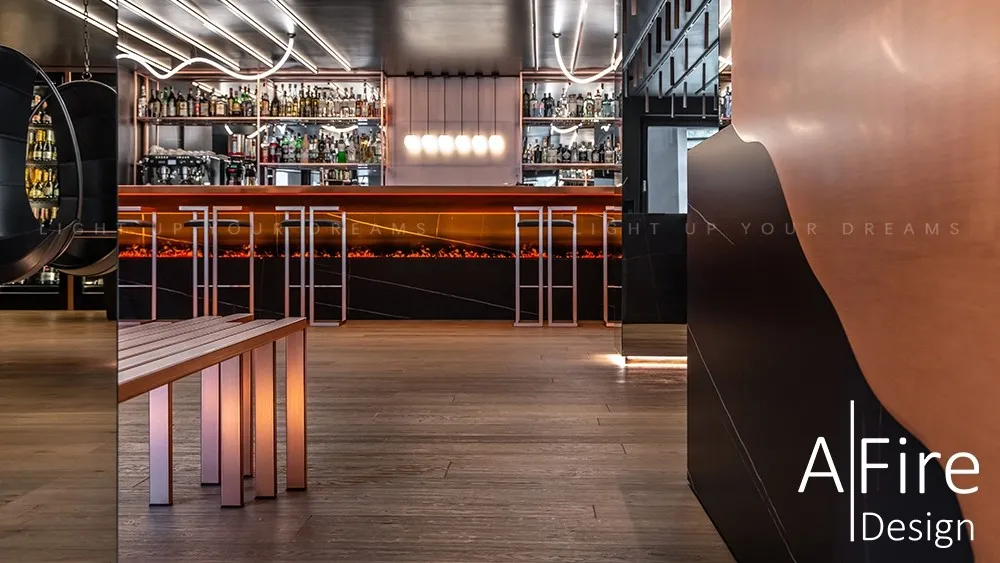
False. Water vapor fireplaces are now widely used in hotels, restaurants, retail spaces, reception areas, event venues and many other public environments. In fact, this technology was partly developed to meet the demands of spaces where aesthetics must be combined with a high level of safety.
Thanks to their combustion-free technology, water vapor fireplaces create realistic flames using water and light, with no real fire, no smoke and no significant heat output. The flames remain cool to the touch, which is a major advantage in areas frequented by guests, customers and visitors.
The absence of a chimney also makes them easier to integrate into architectural projects where a traditional fireplace would be difficult or costly to install. They allow designers and property owners to create a warm and spectacular atmosphere in spaces that welcome visitors, customers and employees every day.
Today, many hotels, restaurants, shopping centers, showrooms and prestigious venues use this technology to enhance their interiors while meeting the practical requirements of safety and daily operation.
👉 Discover our fireplace solutions for hotels, restaurants, bars and public spaces
A Television Cannot Be Installed Next to or Above a Fireplace
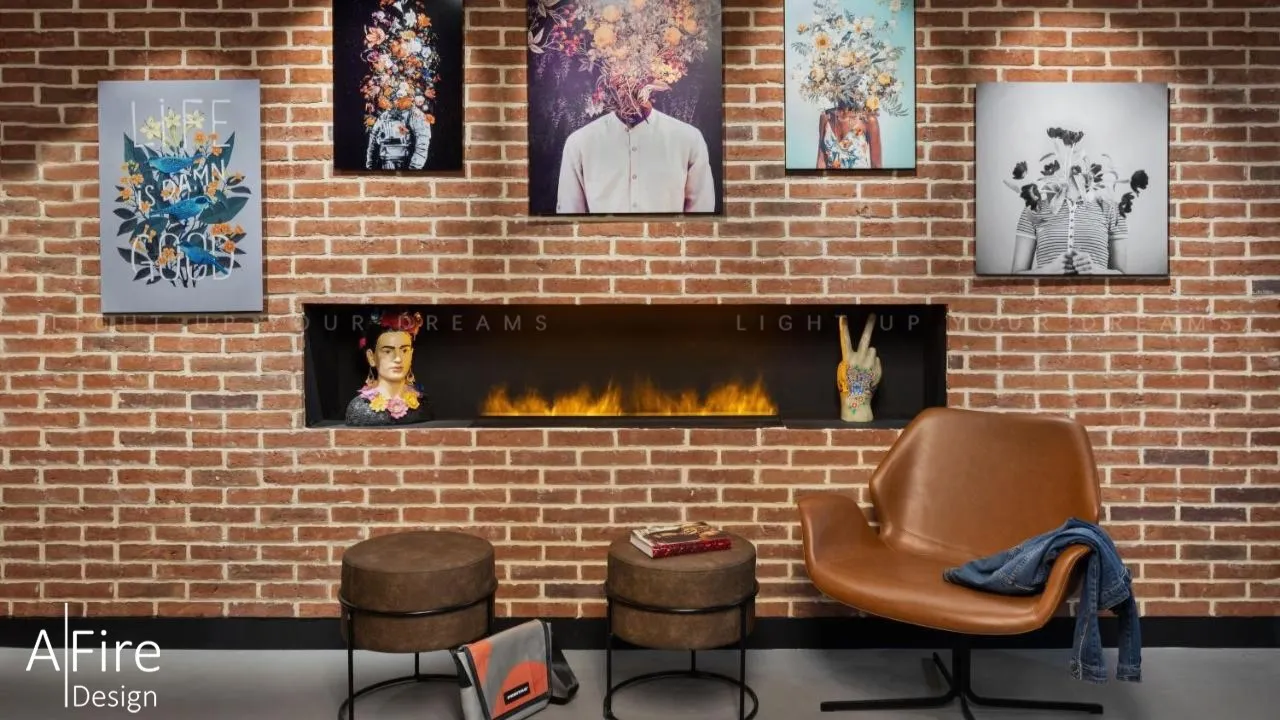
False. In fact, this is one of the most popular fireplace configurations today. Water vapor fireplaces are particularly well suited to projects that incorporate a television above or beside the fireplace. Because they operate without combustion and generate virtually no heat, they make it possible to create TV fireplace walls without the constraints traditionally associated with conventional fireplaces.
The flames are created using water, light and an ultrasonic atomization system. They remain cool to the touch and produce neither significant heat, smoke nor condensation that could damage electronic equipment. This is why water vapor fireplaces are frequently installed beneath televisions in homes, hotels and commercial spaces.
Ethanol burners, on the other hand, produce real flames and real heat. Installing a television nearby is still possible, but the project must be carefully designed. In particular, the minimum clearances recommended by the manufacturer should be respected, taking into account the burner's heat output and the overall installation configuration.
When properly designed, both technologies can be integrated into the same decorative project. However, water vapor fireplaces remain the simplest and most flexible solution for installations that combine a fireplace and a television.
👉 Discover our advice and examples of TV-compatible fireplaces
Water Vapor Fireplaces Are Not Suitable for Renovation or Home Improvement Projects
False. Water vapor fireplaces are particularly well suited to renovation and home improvement projects. In many houses and apartments, installing a traditional fireplace would be impossible or would require major construction work related to chimney installation, ventilation or structural modifications.
Thanks to their combustion-free operation, water vapor fireplaces can be incorporated into projects where a conventional fireplace would be too complex or too expensive to install. They make it possible to transform a wall, a piece of furniture, an existing fireplace or an unused space into a stunning decorative feature without extensive construction work.
This flexibility explains their growing popularity among architects, interior designers and homeowners looking to modernize an interior while preserving the warm atmosphere traditionally associated with a fireplace. Today, they are used in everything from complete renovations to lighter interior makeover projects.
Available in a wide range of sizes and formats, they can be integrated into apartments, single-family homes, contemporary interiors and even the renovation of older buildings.
👉 Discover our solutions for architects, designers and renovation projects
10 Common Misconceptions About Water Vapor Fireplaces and Ethanol Burners: Conclusion
Water vapor fireplaces and ethanol burners have evolved considerably over the past few years. Yet many misconceptions still persist regarding their safety, installation, maintenance and everyday use. As we have seen, most of these beliefs are based on outdated information, incomplete knowledge or confusion with traditional fireplaces.
Today, these technologies make it possible to enjoy spectacular decorative flames without the constraints traditionally associated with wood-burning fireplaces or certain gas installations. The absence of a chimney, ease of integration, enhanced safety, minimal maintenance and exceptional design flexibility explain their growing popularity among homeowners, architects, interior designers and hospitality professionals.
Whether you are looking for a water vapor fireplace for its realism and safety or an ethanol burner to enjoy real flames, the key is to choose the technology that best matches your project, budget and expectations.
We hope this 2026 update has helped you better understand the real advantages of these modern fireplace solutions and given you the confidence to make the right choice for your project.
Learn how water vapor fireplaces work, explore their benefits, safety features, installation options and answers to the most frequently asked questions.
Discover the AFIRE ranges, learn how automatic ethanol burners operate and find answers to the most frequently asked questions.