


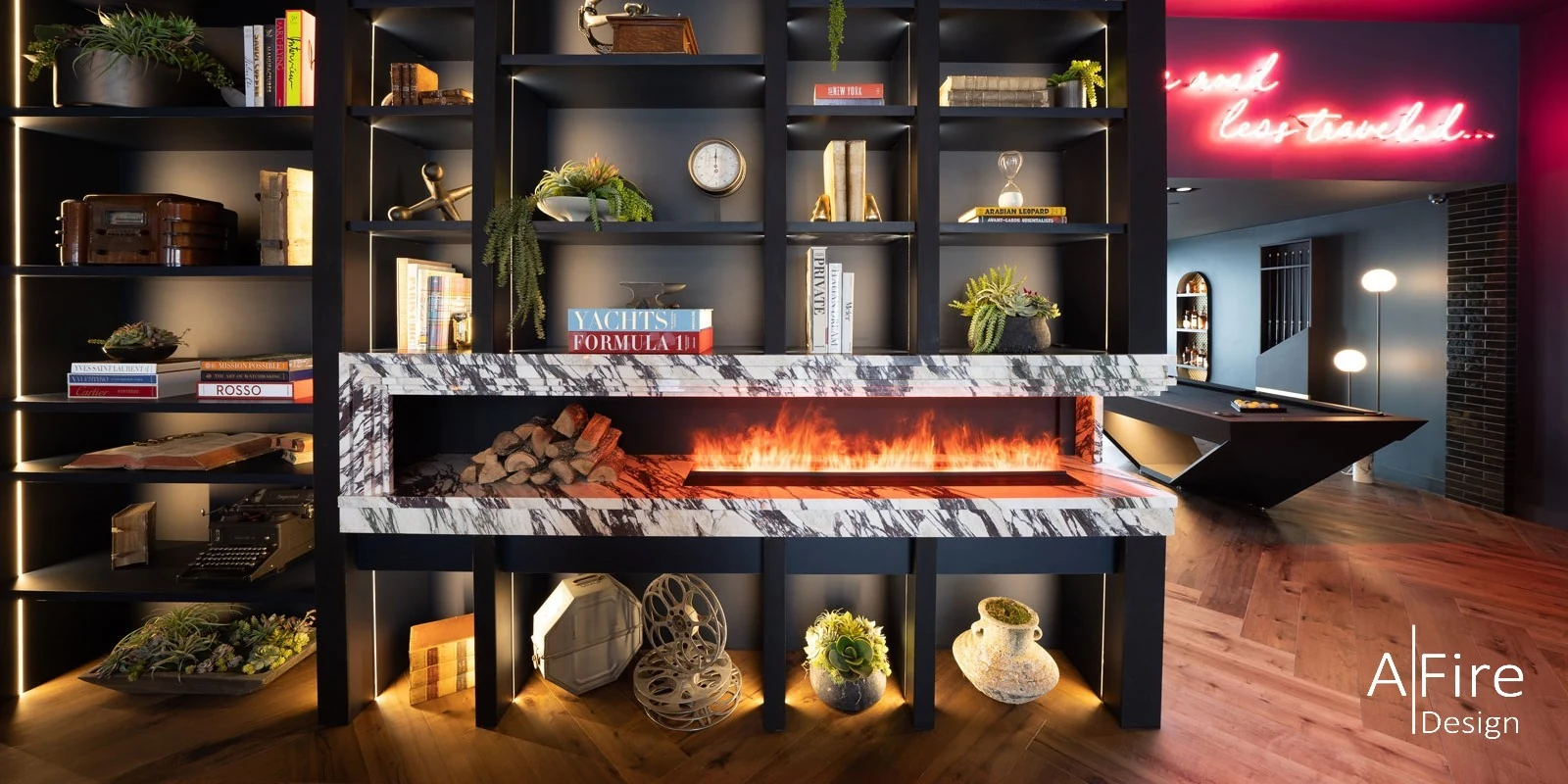
Why Choose a Ventless Fireplace and Which Option Is Right for You?
A ventless fireplace lets you enjoy the presence of fire in spaces where installing a traditional fireplace and chimney is impossible, too complex or simply unsuitable for the project.
Its main advantage is the freedom of installation. Without a chimney or flue, there are far more possibilities for integrating a fireplace into the architecture and interior design, in both residential and commercial projects.
But not all vent-free fireplaces work in the same way. Electric, water vapor or ethanol fireplaces: three technologies are available today, with very different types of flames, uses and installation requirements.
Why Choose a Ventless Fireplace?
The first advantage is obvious: no chimney or flue is required. This makes it possible to consider a fireplace in many projects where installing a flue would be impossible, too complex or disproportionate to the project.
This freedom also changes the way flames can be integrated into a space. The fireplace is no longer necessarily tied to a wall, an existing location or the architecture of a chimney. It can become a true design feature and adapt much more freely to the project.
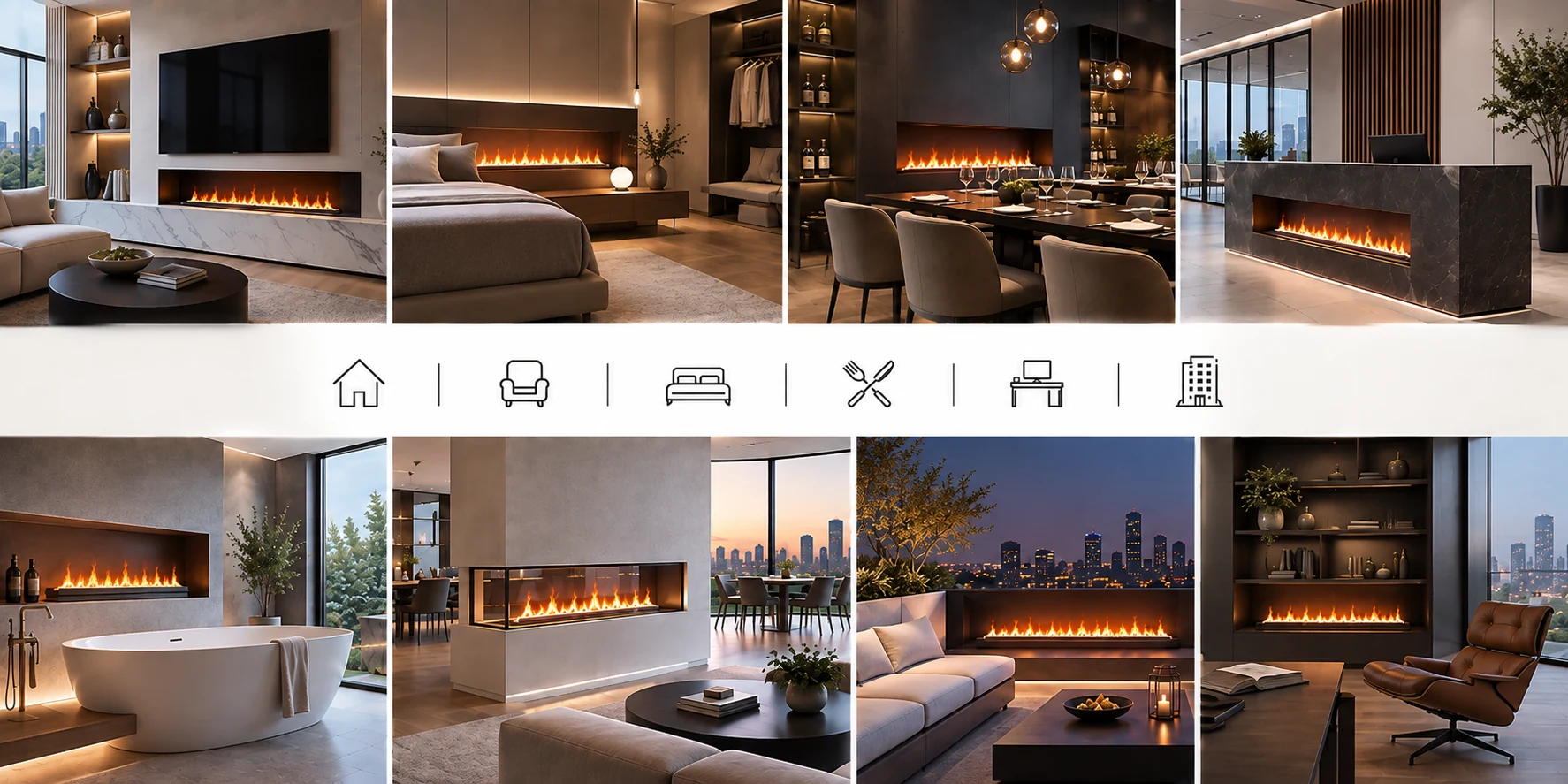
Apartment, house, hotel, restaurant, office or commercial space: the possibilities are numerous, in both new construction and renovation. The work involved, installation requirements and use then depend on the technology chosen: electric, water vapor or ethanol.
What Are the Different Ventless Fireplace Options?
Three technologies are available today for installing a ventless fireplace: electric, water vapor and ethanol. The essential difference lies in the way they create the flames: an image of flames, cold flames or actual combustion.
1. Electric Fireplace: An Image of Flames
An electric fireplace reproduces an image of flames but does not create physical flames. Depending on the technology, this visual effect can be produced using lighting, reflections, screens or projection.
Easy to install and available in many formats, it is generally the most accessible option for creating the visual atmosphere of a flueless fireplace. However, the realism of the flame effect and the integration possibilities vary considerably depending on the technology and model chosen.
2. Water Vapor Fireplace: Cold 3D Flames
A water vapor fireplace uses water and light to create real three-dimensional cold flames. The illuminated vapor creates a moving flame effect in the space, without combustion and without the need for a chimney or flue.
With no heat generated by the flames, it offers great freedom of integration and is particularly well suited to projects where the fireplace is primarily intended as a decorative feature. The realism and natural movement of its three-dimensional flames enhance the presence of fire within the space. It also makes it possible to create long lines of fire and a wide variety of architectural configurations in both residential and commercial spaces.

Choose the Right Ventless Fireplace for Your Project
Ranges & FAQ
Discover the Aquafire ranges, their key benefits and answers to the most frequently asked questions.
Discover AquafireRecommendations
Identify the Aquafire range best suited to your project, use, expectations and budget.
Our RecommendationsCatalogue & Prices
Browse Aquafire water vapor fireplace models, dimensions, accessories and prices.
Browse the CatalogueComparisons
Compare Aquafire ranges, technologies and the main solutions available on the market.
View the Comparisons3. Ethanol Fireplace: Real, Warm Flames
An ethanol fireplace produces real, warm flames through the combustion of ethanol, without requiring a chimney or flue. It is therefore intended for those who want the experience of a real flame together with the heat it produces.
Because it involves combustion and generates heat, its integration must comply with the installation requirements and safety clearances specified for the chosen model. Automatic ethanol burners now make it possible to largely automate their operation while providing a high level of safety.
Which Ventless Fireplace Should You Choose?
The choice depends first and foremost on your project and the experience you are looking for: an image of flames, three-dimensional cold flames or real, warm flames. The flame effect, heat, integration possibilities, installation requirements and budget can then help determine which technology is best suited to your project.
| Electric | Water Vapor | Ethanol | |
|---|---|---|---|
| Flames | Image of flames | Cold 3D flames | Real flames |
| Combustion | No | No | Yes |
| Heat from flames | No | No | Yes |
| Flame effect | Varies depending on the technology | Realistic and three-dimensional | Real flame |
| Installation | Simple to more involved depending on the model | Great freedom of integration | Combustion and heat must be taken into account |
| Ideal for | Simple installation and accessible budget | Decoration and architectural integration | Enjoying real flames and their heat |
There is therefore no single ventless fireplace that is right for every project. The best solution depends on how the fireplace will be used and on the characteristics of the space where it will be installed.
If the main objective is decorative and freedom of integration is a priority, a water vapor fireplace offers many possibilities. If real, warm flames are the priority, an ethanol fireplace is better suited to that experience. A vent-free electric fireplace is generally a simple and accessible option, but the realism of its flame effect depends greatly on the technology used.
Unleash the Flames. Anywhere.
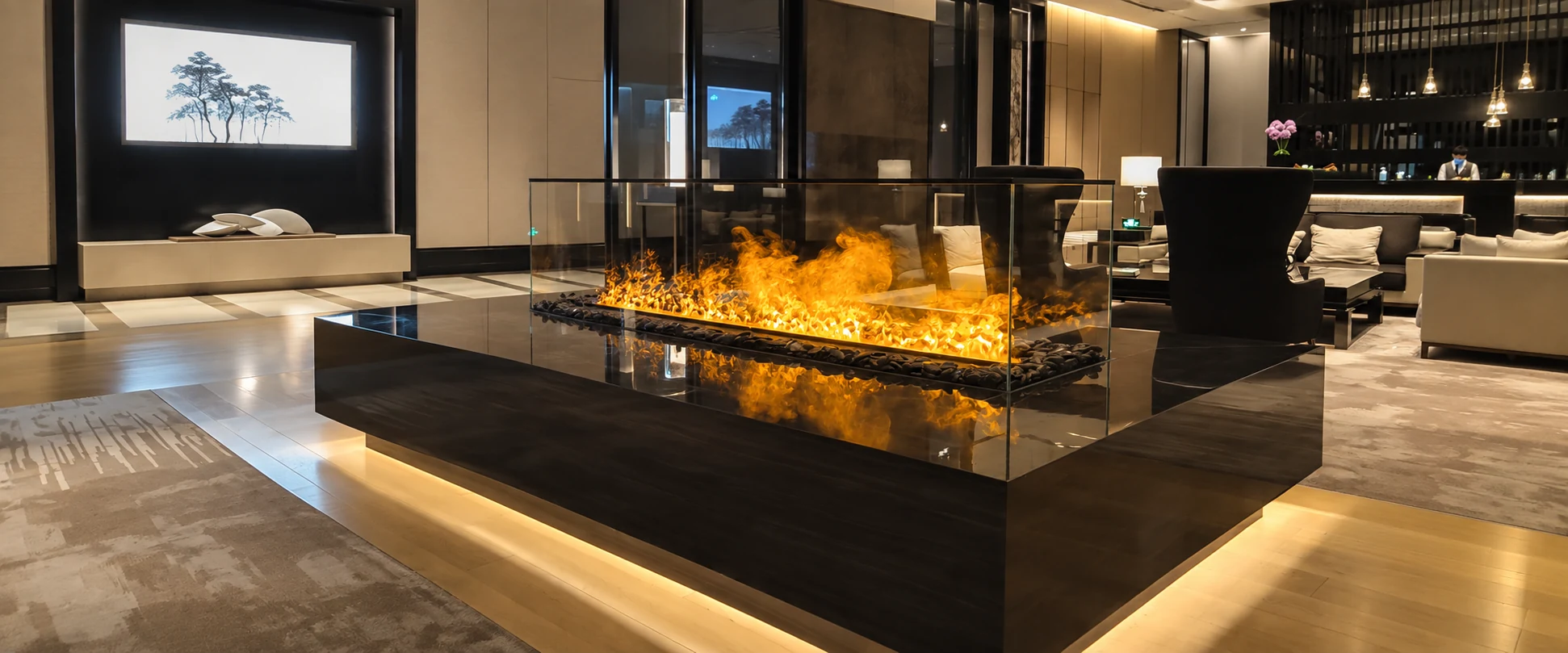
A ventless fireplace pushes the boundaries of installation, making it possible to integrate flames into spaces where a traditional fireplace would be impossible or difficult to consider. Fire is no longer tied to the location of a chimney or flue: it becomes a true element of architecture and interior design.
Built into a wall or furniture, used as a room divider, installed as a central island or extending several meters in length, the possibilities multiply. House, apartment, hotel, restaurant, office or commercial space: every project can create its own place for fire.
Professionals: New Projects for Fire
Ventless fireplaces open up a new market that complements traditional fireplaces. They make it possible to bring fire into projects and spaces where installing a chimney or flue is not possible or suitable.
Fireplace dealers, architects, interior designers, fit-out specialists, TV and media wall specialists, cabinetmakers, kitchen specialists and hospitality professionals can therefore expand their offering and access new types of projects.
AFIRE works directly with professionals, providing support with product selection, technical integration and project follow-up through its Aquafire® water vapor fireplaces and automatic ethanol burners.
Would you like to integrate our solutions into your projects or present them to your clients? Discover the AFIRE & Aquafire® Partner Program →
Frequently Asked Questions About Ventless Fireplaces
Does a Ventless Fireplace Produce Heat?
It depends on the technology. A water vapor fireplace creates cold flames without combustion. An ethanol fireplace produces real flames and therefore generates heat. Depending on the model, electric fireplaces may include a heating system that operates independently from the flame effect.
Does a Ventless Fireplace Produce Real Flames?
Each technology creates flames in a different way. An electric fireplace reproduces an image of flames. A water vapor fireplace creates three-dimensional cold flames from water and light. An ethanol fireplace produces real, warm flames through the combustion of ethanol.
Can a Ventless Fireplace Be Installed in an Apartment?
Yes, depending on the technology chosen and the installation requirements. The absence of a chimney or flue makes it possible to consider a fireplace in many apartments where a traditional fireplace would be difficult or impossible to install. Technical and safety requirements must nevertheless be considered according to the chosen solution and the specific project.
Which Ventless Fireplace Requires the Least Installation Work?
It depends on the model and the type of integration required. An electric fireplace may only require a power supply, while a water vapor fireplace also requires a water connection or a refillable water tank, depending on the model. An ethanol fireplace does not require a chimney or flue, but its installation must take combustion, heat and safety clearances into account.
Which Ventless Fireplace Should You Choose for a Hotel, Restaurant or Commercial Space?
In hotels, restaurants and other public spaces, a water vapor fireplace is generally the most suitable solution. Its cold flames, with no combustion and no heat generated by the flames, allow fire to be integrated much more freely into the architecture and interior design.
It can be installed in a lobby, restaurant, bar, lounge or meeting room, or integrated into furniture and room dividers. Ethanol, with its real, warm flames, involves significantly greater safety constraints and is therefore generally not the preferred solution for this type of project.