


Water Vapor Fireplaces 2026: Two Worlds, Two User Experiences
In 2026, the market for water vapor fireplaces has reached maturity. Solutions have multiplied, but levels of design quality, technological control, and overall execution remain highly uneven. Users are now better informed and no longer ask only what to buy, but rather which ecosystem they are choosing to engage with.
In 2026, a water vapor fireplace is defined by how it integrates into an interior design project and by the experience it creates over time.
Behind products that may appear similar at first glance, two fundamentally different user experiences now coexist.
World 1: Standard sales through generalist platforms
Generalist platforms prioritize speed and price, but rarely take real-world use, integration, or long-term follow-up into account.
Generalist sales platforms rely on clear and efficient mechanisms: maximum visibility, quick price comparison, and immediate decision-making. This model works very well for standardized products that are simple to use, low in added value, and primarily chosen for price and availability.
In this environment, information is deliberately simplified, the product is reduced to a few key features, and the experience often ends at the point of purchase. Advice, real-world integration, project support, or long-term maintenance are rarely considered. This is not a flaw of the model — it is its very nature.
World 2: The professional interior design ecosystem
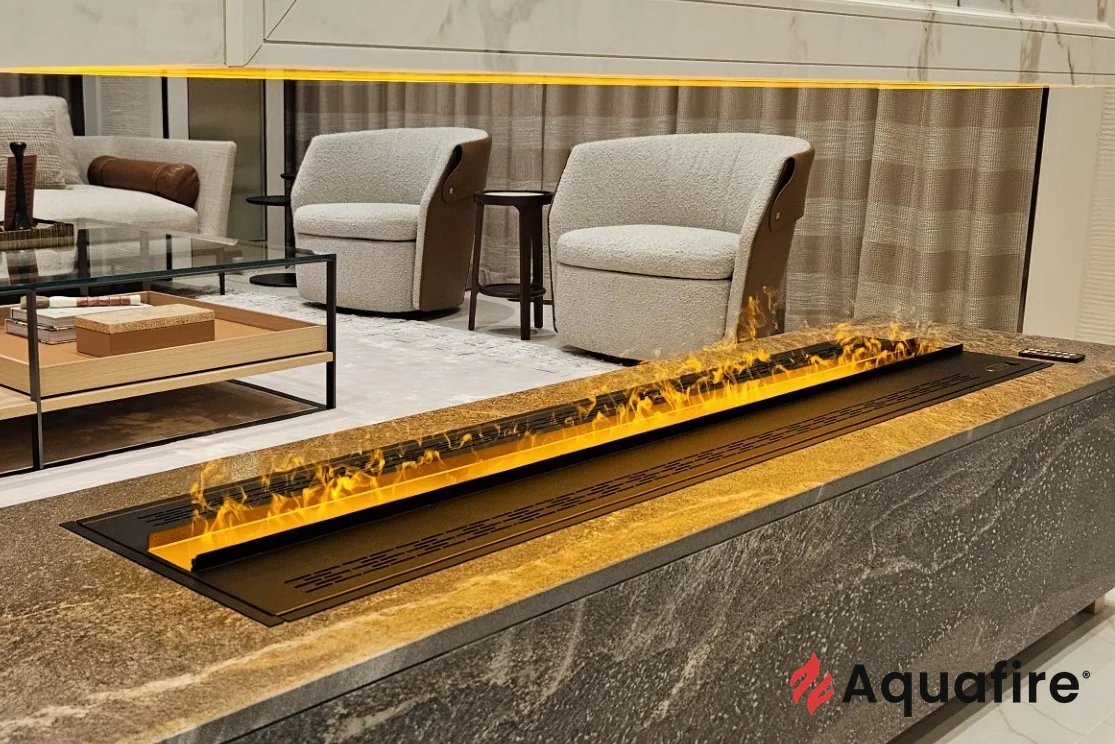
A water vapor fireplace only makes sense when it is integrated into an interior design project, where the manufacturer provides a genuine toolbox to select the appropriate solution, rather than offering a standalone product.
Unlike standardized sales models, water vapor fireplaces belong to a professional interior design ecosystem. They are not purchased as autonomous objects; they are integrated into a project, a space, and a specific use case. Here, integration, durability, and real-world user experience matter just as much as the object itself.
As a manufacturer, our role is to provide a complete toolbox that allows each project to be approached at the appropriate level. Some users choose a self-managed installation, while others rely on professionals when the project requires it. Information, technical guidance, drawings, support, and after-sales service form a coherent whole, designed to accompany the project over time, secure the installation, and ensure continuity of use.
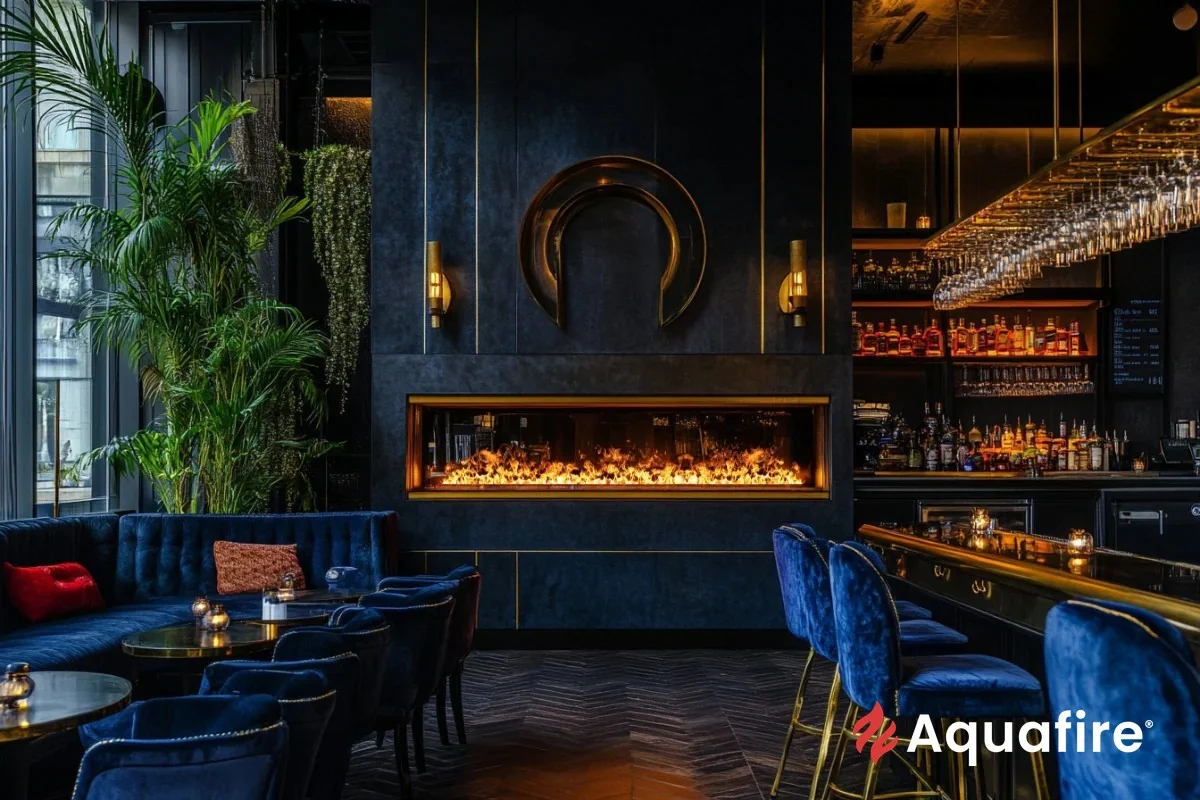
This approach is based on freedom of choice rather than a predefined buying path. It supports both simple residential projects and more demanding professional applications — hotels, restaurants, retail spaces — where reliability, maintenance, and aesthetic consistency are essential. The user experience is therefore built over time, through tools, information, and services available when they are genuinely needed.
Two buying journeys, two outcomes
The quality of the buying journey directly determines the quality of the user experience after installation.
Faced with these two worlds, users are presented with a very concrete choice. On one side, a fast purchase based primarily on price and a simplified product listing. On the other, a more structured journey involving information, exchanges, recommendations, and a genuine projection into real-world use.
For decorative products that are both financially and aesthetically significant, many users are not willing to buy “blind.” They want to understand, to compare beyond price alone, and to be supported in their decision-making. This more demanding journey is also the one that most effectively reduces the risk of disappointment after purchase.
Choosing a water vapor fireplace is not just about selecting a product, but about choosing the ecosystem that will support it over time.
What the past year has clearly shown
The past year has confirmed that purely algorithm-driven sales quickly reach their limits when applied to decorative products designed to be integrated into interior design projects.
Over the past year, the limitations of purely algorithmic sales models have become increasingly visible when applied to decorative products of this kind. Very low-quality products, sold with insufficient information, without realistic return options, and without after-sales service or maintenance, have generated growing frustration among users.
Not all decorative products can be treated as everyday consumer goods driven solely by price.
This reality is not anecdotal. It has contributed to a growing awareness: the market is naturally beginning to distinguish between volume-driven models and more responsible approaches focused on real-world use, durability, and the overall coherence of the user experience.
The Aquafire by AFIRE position
As a manufacturer, our responsibility does not end at the point of sale, but extends throughout the entire lifecycle of use.
In 2026, we clearly choose to operate within the professional interior design ecosystem. We believe in clear information, expert guidance, thoughtful integration, and long-term manufacturer responsibility. A water vapor fireplace is not simply a product to be sold, but a decorative solution that must be designed, installed, used, and maintained with care.
Prioritizing real user experience necessarily requires a more demanding model.
Our position is deliberately simple: to prioritize user experience over fast sales, to support projects rather than multiplying product references, and to embrace a more structured, more responsible, and ultimately fairer model — both for users and for the professionals who support them.
Conclusion
Choosing a water vapor fireplace in 2026 means choosing an approach and a long-term relationship.
In 2026, choosing a water vapor fireplace is no longer limited to comparing specifications or prices. It means choosing an ecosystem, a way of designing the product, and a long-term relationship between the manufacturer, the project, and the end user. Between standardized sales logic and the professional interior design ecosystem, the market is now undergoing a natural sorting process. And this choice ultimately belongs to users.